

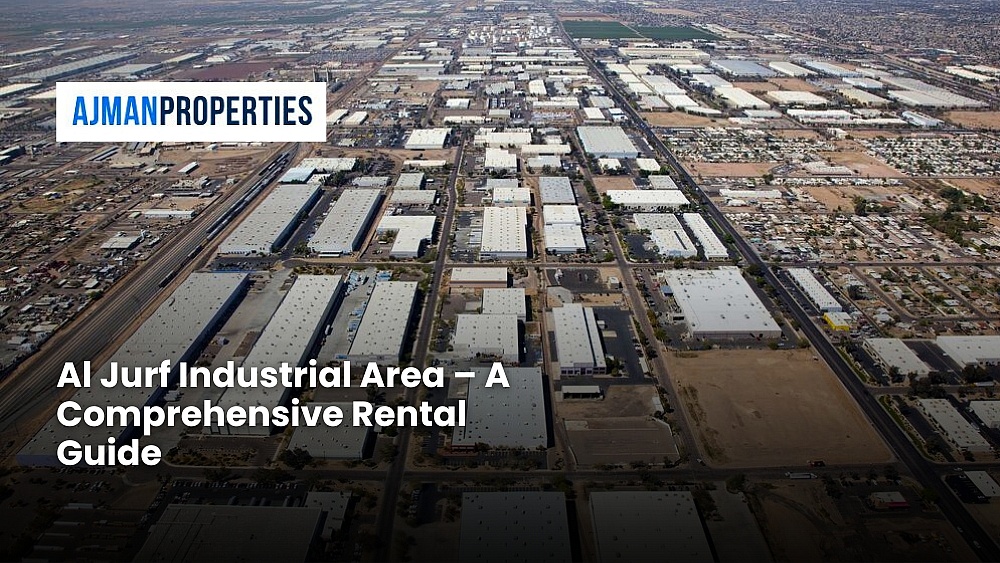
Al Jurf Industrial Area is one of Ajman’s busiest industrial and commercial zones, strategically located close to major highways, Ajman Free Zone, and Ajman Port. Known for its warehouses, workshops, commercial buildings, and labour accommodations, the district is a top choice for businesses, traders, logistics operators, and workers’ housing providers. Its accessibility, affordability, and high demand make it a preferred rental destination for companies and residents alike.
Location
Al Jurf Industrial Area sits along Sheikh Mohammed Bin Zayed Road (E311) and offers smooth access to:
-
Ajman Free Zone
-
Ajman Port
-
Al Zorah
-
Sharjah & Dubai
-
Government departments (Ajman Court, Etisalat, Police Station)
The area has a well-developed road network with access to supermarkets, clinics, labour supplies, workshops, transportation routes, and restaurants, making it ideal for industrial, commercial, and residential tenants.
Residential Apartments for Rent in Al Jurf Industrial Area
Al Jurf has a growing number of residential apartments designed for workers, families, and staff employed in surrounding factories and commercial hubs. Apartments are typically in low-rise and mid-rise buildings with essential amenities.
|
Apartment Type |
Size |
Annual Rent (AED) |
|
Studio |
450 sq ft |
AED 18,000 |
|
1-Bedroom |
850 sq ft |
AED 28,000 |
|
2-Bedroom |
1100 sq ft |
AED 40,000 |
Note: Units near main roads or with balconies generally have higher rent.
Warehouses for Rent in Al Jurf Industrial Area
Al Jurf is Ajman’s leading warehouse district, making it ideal for logistics, trading, manufacturing, auto workshops, and storage businesses. Most warehouses come with FEWA power, loading bays, and truck access.
|
Warehouse Type |
Size (sq ft) |
Annual Rent (AED) |
|
Standard warehouse |
25,000 sq ft |
AED 100,000 |
|
Medium warehouse |
12,000 sq ft |
AED 200,000 |
|
Large warehouse |
30,000 sq ft |
AED 400,000+ |
Note: Warehouses with high-power FEWA connections and main-road access command higher rental values.
Labour Camps for Rent in Al Jurf Industrial Area
Labour accommodations are in high demand due to the industrial workforce in the district. Buildings usually include shared rooms, kitchens, and washrooms with dedicated supervisors.
|
Camp Type |
Capacity (Rooms/Beds) |
Estimated Number of Persons |
Annual Rent (AED) |
|
Small labour camp |
20 rooms |
160 persons |
AED 250,000 |
|
Medium labour camp |
40 rooms |
320 persons |
AED 450,000 |
|
Large labour camp building |
100+ rooms |
800+ persons |
AED 1,000,000+ |
Note: Labour camps located near industrial hubs or transport routes tend to have higher occupancy rates.
Commercial Shops & Showrooms for Rent
Shops and showrooms in Al Jurf enjoy high visibility due to heavy traffic flow and proximity to crowded industrial zones.
|
Type |
Size (sq ft) |
Annual Rent (AED) |
|
Retail shop |
700 sqft |
AED 40,000 |
|
Showroom (main road) |
5,000 sqft |
AED 300,000+ |
Note: Corner showrooms and units facing E311 or major internal roads command premium rentals.
Industrial Plots Yards (Leasehold) for Rent
Industrial plots are commonly leased for open yards, workshops, storage of heavy equipment, fabrication, and logistics operations.
|
Plot Type |
Size (sq ft) |
Annual Rent (AED) |
|
Open Yard (sand/leveled) |
5,000 – 10,000 |
AED 25,000 – 60,000 |
|
Large Industrial Yard |
15,000 – 30,000 |
AED 70,000 – 150,000 |
|
Fully fenced serviced yard |
20,000 – 40,000 |
AED 120,000 – 250,000 |
Note: Yards with boundary walls, gates, and FEWA power have higher rental values.
Conclusion
Al Jurf Industrial Area remains one of Ajman’s strongest rental markets thanks to its consistent demand for warehouses, labour camps, and commercial units. Its strategic connectivity to E311, Ajman Free Zone, and Ajman Port makes it an ideal hub for businesses seeking convenience and accessibility. The district is also known for offering budget-friendly rental rates compared to Dubai and Sharjah, which attracts companies looking for cost-effective operational spaces. With reliable occupancy from logistics firms, factories, traders, and industrial workers, the area continues to benefit from stable activity and strong rental performance. Overall, its blend of affordability, prime location, and continuous commercial movement makes Al Jurf a preferred choice for both residential and industrial tenants.
FAQs - Frequently Asked Questions
1. What are the typical lease terms and payment schedules in Al Jurf Industrial Area?
Standard lease agreements in Al Jurf run for 12 months with renewal options. Most landlords accept payment in 1 to 4 cheques annually, though warehouses and commercial properties often require fewer cheques (1-2) compared to residential units. A security deposit of 5-10% of the annual rent is standard, refundable upon lease completion subject to property condition. Tenants should budget for approximately 5% brokerage fees and initial FEWA (utilities) connection charges.
2. Are labour camps in Al Jurf compliant with UAE labour accommodation standards?
Yes, registered labour accommodations in Al Jurf must comply with Ajman Municipality and UAE Ministry of Human Resources regulations. These standards mandate minimum space per occupant (3-4 square meters), adequate ventilation, proper sanitation facilities, fire safety systems, and recreational areas. Reputable properties maintain valid Tawtheeq registration and regular municipal inspections. We recommend verifying compliance certificates before signing any labour camp lease agreement.
3. What utilities and additional costs should I expect when renting a warehouse?
Warehouse tenants typically pay for FEWA (electricity and water) consumption separately from rent, which can range from AED 3,000 to AED 15,000+ monthly depending on usage and power capacity. Additional costs include municipality fees (5% of annual rent), chiller/AC expenses if applicable, and maintenance charges. Most warehouses come with basic loading facilities, but specialized requirements like heavy-duty power connections, dock levelers, or climate control may incur installation costs of AED 20,000-50,000.
4. Can I operate any type of business from warehouses in the Al Jurf Industrial Area?
Al Jurf Industrial Area is zoned for industrial, commercial, and light manufacturing activities. Permitted operations include logistics and storage, trading and distribution, automotive workshops, light manufacturing, fabrication, carpentry, and equipment storage. Certain activities require specific trade licenses and NOCs (No Objection Certificates) from relevant authorities. Heavy industrial operations, hazardous material storage, and activities generating excessive noise or pollution may face restrictions. Always verify permitted activities with the Ajman Economic Development Department before leasing.
5. Is Al Jurf suitable for family accommodation, or is it primarily for workers?
While Al Jurf is predominantly industrial, it offers residential apartments suitable for families, particularly those working in nearby facilities or seeking affordable housing. The area has essential amenities, including supermarkets, clinics, schools within short driving distance, and public transportation. However, families should note the industrial character of the district, which includes commercial vehicle traffic and operational activity during business hours. Many families employed in industrial sectors find Al Jurf convenient and budget-friendly compared to Ajman's coastal residential areas.
6. How does Al Jurf's rental pricing compare to similar industrial areas in Sharjah and Dubai?
Al Jurf Industrial Area offers significant cost advantages, with rental rates typically 20-30% lower than comparable properties in Sharjah's Industrial Areas (1-18) and 40-50% below Dubai's industrial zones like Al Quoz and Jebel Ali. For example, a 5,000 sq ft warehouse costing AED 70,000-80,000 annually in Al Jurf would cost AED 100,000-120,000 in Sharjah and AED 140,000-180,000 in Dubai. This affordability, combined with excellent E311 connectivity and proximity to Ajman Free Zone and Port, makes Al Jurf an attractive option for cost-conscious businesses requiring strategic location access.
7. What technical due diligence should be conducted before leasing an industrial property in Al Jurf Industrial Area?
Before finalizing a lease, tenants should carry out comprehensive technical due diligence, including verification of structural integrity, floor load capacity (kN/m²), slab thickness, roof condition, and column spacing. Electrical systems must be checked for 3-phase availability, sanctioned load, transformer proximity, and future load expansion capability. Additionally, tenants should inspect water pressure, drainage capacity, fire-fighting systems, ventilation provisions, and emergency access routes. Ensuring compliance with Ajman Municipality zoning and Civil Defence approvals is critical to avoid operational disruptions after occupancy.
8. How does power infrastructure and load approval work for industrial tenants?
Industrial properties in Al Jurf are typically connected to FEWA (Federal Electricity & Water Authority) supply. While most units provide baseline 3-phase power, tenants operating heavy machinery must apply for additional sanctioned load approvals, which may require transformer upgrades, substation access, or cabling enhancements. The approval process involves load calculations, electrical drawings, and inspections. Tenants should clarify who bears upgrade costs to the landlord or tenant before signing the lease.
9. What fire and life safety compliance requirements apply to rented industrial units?
All industrial and labour accommodation facilities must comply with UAE Civil Defence Fire & Life Safety Code. This includes automatic fire alarm systems, smoke/heat detectors, emergency lighting, illuminated exit signage, fire extinguishers, hose reels, fire pumps, and evacuation plans. Warehouses storing flammable materials may require sprinkler systems and fire-rated walls. Annual inspections and certification renewals are mandatory, and non-compliance can lead to fines or business closure.
10. What floor loading and structural limitations should tenants consider?
Not all industrial units are suitable for heavy manufacturing. Tenants should confirm the maximum permissible floor loading, especially for CNC machines, presses, forklifts, or racking systems. Inadequate slab design can cause cracking or settlement. For mezzanine construction or racking above certain heights, structural calculations and municipality approval are required. Older warehouses may have lower load tolerance and require reinforcement.


Comments (0)
Leave a comment